
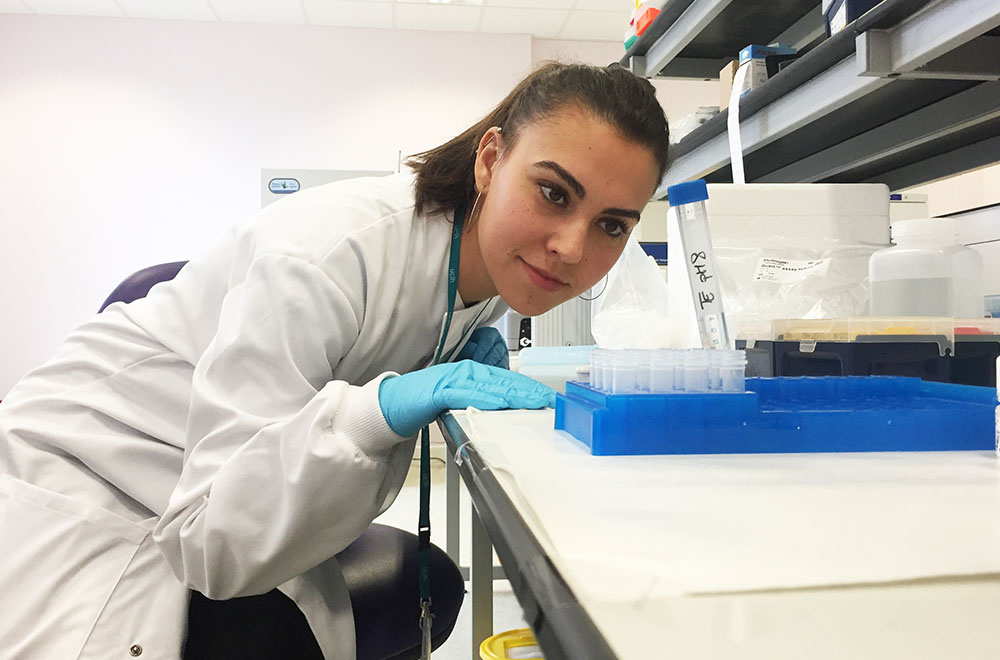
Therapeutic Drug Monitoring (TDM) at the Epilepsy Society
Our Therapeutic Drug Monitoring (TDM) Unit offers a comprehensive range of anti-seizure medication (ASM) assays
Our Therapeutic Drug Monitoring Unit (TDM)
We provide a TDM assay service for anti-seizure medications (ASMs), which is the only TDM service in the UK that provides an analytical service for 24 ASMs currently licensed for clinical use and 4 pharmacologically active metabolites.
We provide a specialist ASM analytical service to the National Hospital for Neurology and Neurosurgery, University College Hospitals NHS Trust, and to many hospitals, forensic and private pathology laboratories, veterinary practices and organisations throughout the UK and from Europe.
Why use our service?
Clinical insight
Our registered clinical scientists and neurologists are here to support you.
Cost-effective and efficient
A single sample of serum, plasma, whole blood or saliva can cover all the ASMs requested, saving you time and money.
Timely
The assay service is routinely available Monday to Friday, 9am-5pm. For urgent assay requests, please contact the unit in advance. The unit will report on non-urgent assay requests within 3 working days of sample receipt, excluding weekends or bank holidays. Access to results is via our secure portal.
Please get in touch for further information
Phone: 01494 601 423 (Mon to Fri 9-5pm)
Email: TDM_Unit@epilepsysociety.org.uk
Which assays are available?

What is Therapeutic Drug Monitoring (TDM)?
Therapeutic drug monitoring (TDM) is an area of clinical chemistry that specialises in measuring medication levels (concentrations) in patients, usually through blood samples but also through saliva samples. Because anti-seizure medications are among the types of drugs that can be easily under dosed or over dosed, they are particularly suitable for monitoring. The measured levels are used by the doctor to adjust each patient’s individual dosage and schedule to each patient’s individual therapeutic requirement. Thus, drug efficacy (the anti-epileptic effect of a drug) is kept to a maximum while the undesirable side effects are kept to a minimum.
Monitoring drug concentrations
Learn how monitoring anti-seizure medication concentrations can help optimise treatment, assess side effects, manage complex clinical situations, and improve seizure control.

Sample type
Find out which sample types are used for therapeutic drug monitoring, recommended sampling times, specimen requirements, and how to access specialist testing and clinical support.

Using the TDM service
See guidance for healthcare professionals on requesting TDM tests, collecting and submitting samples, understanding sampling requirements, and accessing results.

Read full user's guide
Read the full user's guide to our Therapeutic Drug Monitoring Unit
Download our TDM service information leaflet
Information in a convenient, printable A4-sized leaflet.
Please get in touch for further information
Phone: 01494 601 423 (Mon to Fri 9-5pm)
Email: TDM_Unit@epilepsysociety.org.uk